It's a long story
I’ve spent most of my life moving — not just between cities or countries, but also between schools, workplaces, friendship groups and versions of myself that never quite stuck.
It started when I was three, moving from the suburbs to Outback Australia. A childhood filled with red dirt and rogue emus. By nine, my family and I were in the United States, living at the base of the majestic Rocky Mountains, where I would spend my most formative adolescent years. I didn’t know it then, but this pattern — arriving, adjusting, leaving — would follow me throughout my life.
Our return to Australia took us to the rolling hills of winery country, and a much slower pace. By the time I graduated high school, I had attended eight different schools. University, while constant in terms of institution and location, was also full of change. I switched courses four times, studying everything from politics and anthropology to veterinary science, law and psychology. I also had a myriad of part-time roles, switching things up every time I found an interesting job posting.
Having moved around as a child, it was only natural that friendship groups also came and went. I was lucky enough to have close family friends who were always there whenever we returned to our hometown, but that met-in-preschool-lifelong-BFF type of friendship has always eluded me.
This life of flux continued into adulthood. After a couple of years working as an Associate to a Supreme Court Judge, I completed an internship with the UNHCR before bouncing around various government departments for the better part of a decade. A change of scenery was always more attractive than staying put.
Then, the world shut down. Before COVID, regular trips and a periodic career change (or existential crisis) soothed my itchy feet enough to keep me in Adelaide. But the prospect of closed borders was just a bit too claustrophobic to handle. In the midst of the international chaos, I felt a sudden insatiable urge to tackle the biggest item on my bucket list: to live and work overseas while learning a language.
So, in 2021, when borders were still closed, I moved alone to Iwate Prefecture in northern Japan. Armed with little more than a suitcase and a pair of government-issued travel exemption letters (and fresh from two weeks of hotel quarantine overlooking the Shinjuku skyline), I arrived at Morioka Station. I had returned to the mountains. The November air was crisp and clean, the maple leaves turning from green to vibrant shades of yellow, orange and red. The change of season was both literal and metaphorical.
I had imagined that this sabbatical would finally scratch the itch — that the distance, language, and cultural immersion would somehow quiet the restlessness that had followed me for years. I told myself that following a year or so of adventure, I would return to my long-term partner, my pug, my home, satisfied and ready to settle. Permanently, this time.
But distance changes things. The fourteen-year relationship ended over FaceTime. I no longer had a physical home base. The safety nets I had in Australia had all fallen away. I didn’t have a plan. I was completely unanchored.
I sat on the cold floor of my 19-square-metre apartment, studying the faded 1970’s floral wallpaper, contemplating my mediocre teaching assistant salary and questioning my life choices. In Australia, I had a coveted permanent position in government, lived in a CBD townhouse, and was close to family and friends. I had stability. I was comfortable. Here, even the simplest daily tasks required translation, the snow outside reached my knees, and I was exhausted from no longer being able to do anything on autopilot.
It was the first time in my life that I couldn’t immediately fix the discomfort by switching jobs or university courses. Change had always felt like progress to me. A new city, a new role, a new version of myself — each move came with the promise of something better. But in Japan, for the first time, change didn’t feel like movement forward. It felt like standing still without anything familiar to hold on to.
But it was the comfort that took me away from Adelaide, the stability that was stifling. I had wanted a challenge, and that’s what I got. So, I figured I had better make the most of it.
I adored my tiny apartment. Work was fun. I never imagined I’d be doing silly role-plays in front of 40 blank-faced students, or trying to stop the judo boys from strangling each other mid-crossword, but there was satisfaction amongst the madness. Being a beginner in the language came with a degree of ignorance that somehow made life less stressful. And, fortuitously, I found a wonderful group of friends. All of similar age, but from different places, with different perspectives.
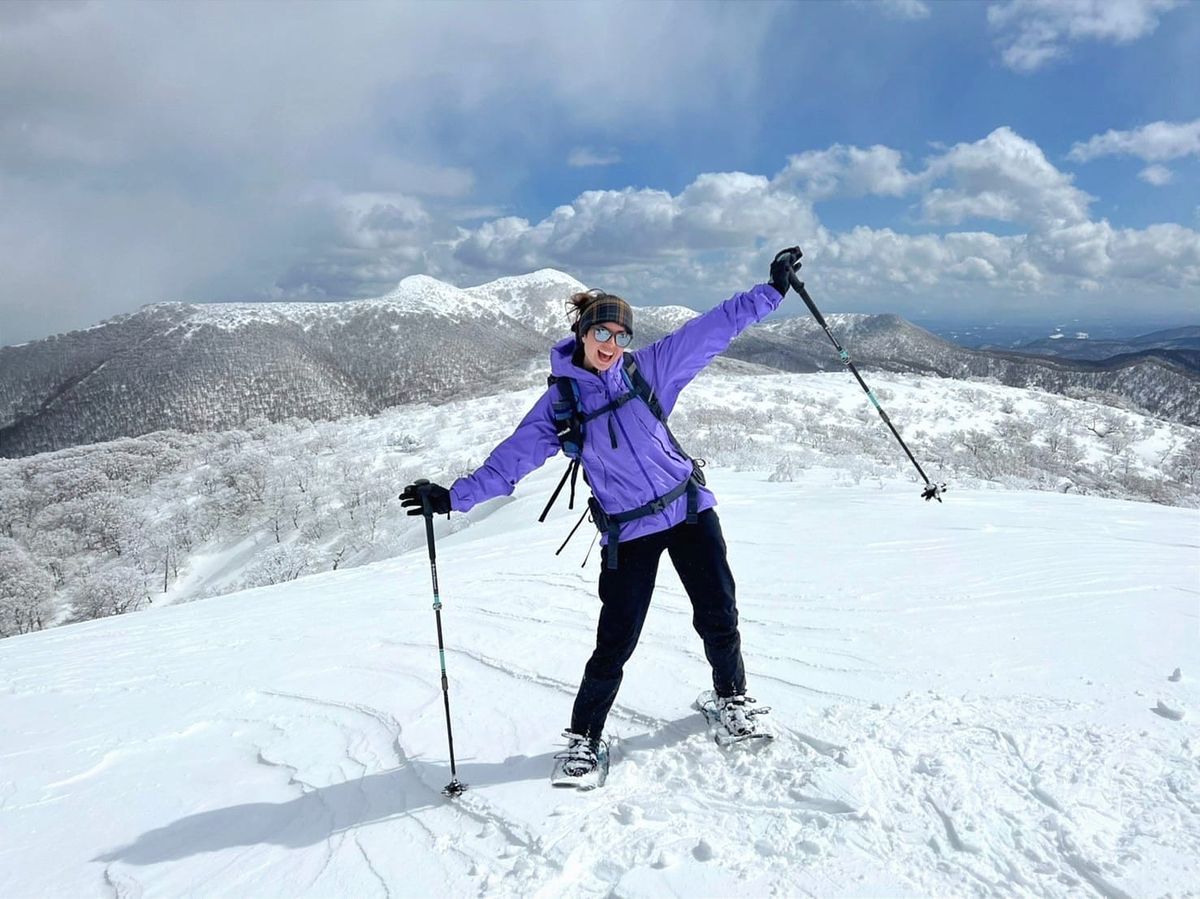
We spent winter mornings snowshoeing to frozen waterfalls, spring evenings walking under the illuminated cherry blossoms, summer nights watching fireworks and autumn days chasing the changing leaves. I will never forget my thirty-third birthday, sitting in a steaming outdoor onsen with my friends, the silhouette of the mountains surrounding us, snow falling softly from the star-studded sky. I was exactly where I was supposed to be.
But, once again, I found myself too settled. Change still beckoned, although this time heavily influenced by another. Having switched to travel mode and braved the thousands (literally) of repetitive, sometimes questionable, often dull, and occasionally intriguing profiles on Bumble in the Tokyo area, I matched with my now-husband. Our first date started with dinner and ended at the Shinkansen gates three days later. It was one of those love-at-first-sight, whirlwind kind of things. Absolutely not without its fair share of drama and trepidation, but ultimately exciting and somehow right. In your thirties, you have a much better idea of what you want and what you’re willing (or not) to compromise on.
My husband, much like me, had also lived a life of movement. Perhaps living abroad as a child instils something in your consciousness that never quite goes away? Enticed by the thought of another fresh start and my husband’s boundless confidence, I moved to Tokyo. I became an anonymous face in a city of 37 million people who speak a language I largely can't understand. But again, I somehow felt as though I belonged.
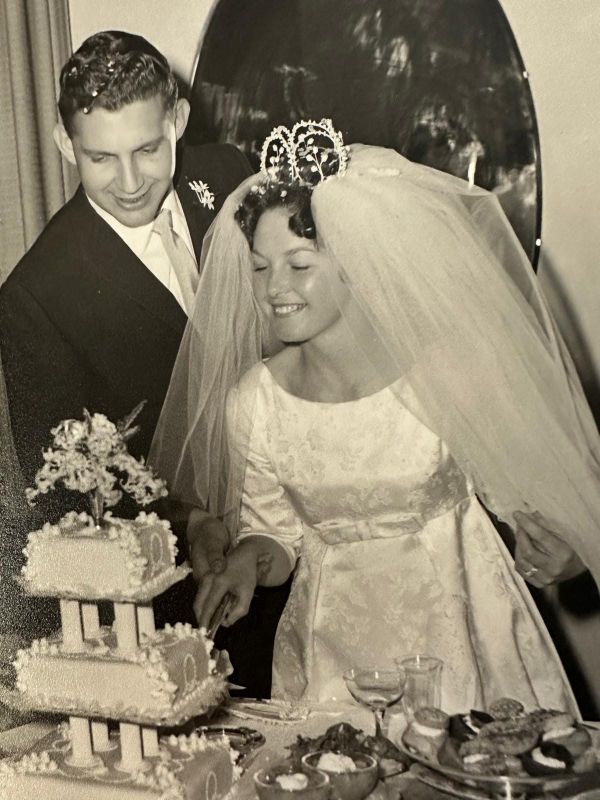
We were engaged on my birthday and married at the City Hall nine days later — an unceremonious signing of forms. The following month, he was transferred for work, and we moved together to Kuala Lumpur, Malaysia. It’s a strange thing. Even though English is universally spoken and Malaysia is much more multicultural than Japan, it is here that I perhaps feel the least sense of belonging thus far. That may well be because, as a travelling spouse, I have had to navigate my identity without any kind of professional anchor for the first time. It has also been a period of immense personal growth, transitioning from a staunch feminist who did not want children to becoming a housewife dealing with the disappointment of recurrent miscarriage.
Having spent the past two years trying to figure out my new identity in a new place, I decided to start stringing words together on the off chance someone else might be interested in reading along. Now, I write this from an outdoor table at a Bangsar café, surrounded by fiddle leaf figs and humidity, in my third trimester. My husband and I are on the verge of our greatest adventure yet, becoming parents. We will move again, that is certain. I will change careers (again), start (and give up on) new hobbies, and make new friends. Where we will end up, I do not know. All I do know is that it won’t be a linear path to get there, if there even is an end destination after all.
What I’ve come to learn is that you don’t need to be fluent to belong somewhere. Not in the language, the culture, in love or in friendship. I understand now that the want for change is not always tied to a want to escape, nor does it have to be a progressive step. It is simply part of who I am, and who my family will be. Which is why I will always be, in one way or another, far from fluency.